
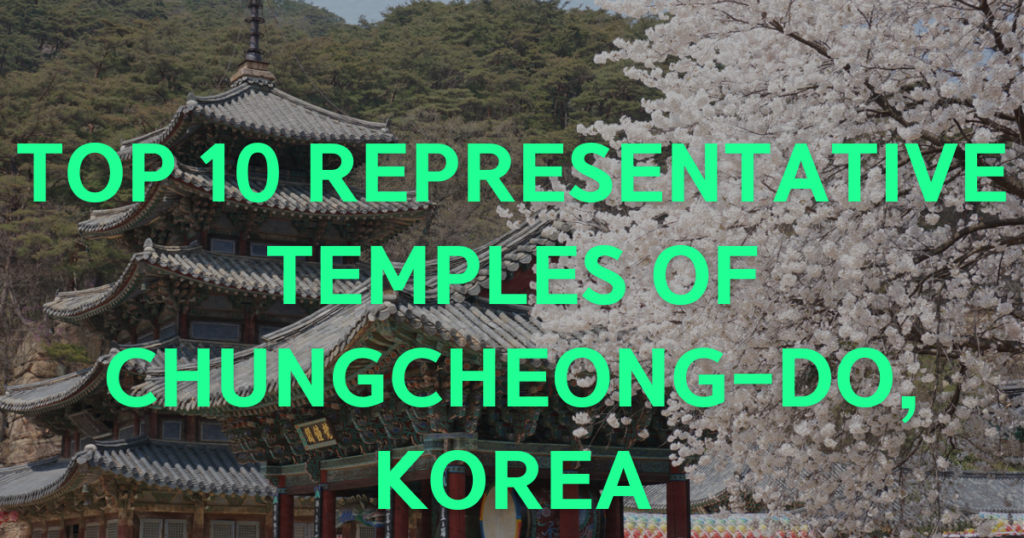
1. Beopjusa Temple (Boeun)
“The only surviving 5-story wooden pagoda in Korea that withstood the scars of war.”
Founded in 553 AD during the Silla Dynasty by Master Uisin, Beopjusa means “a house where the Dharma (Buddha’s teachings) resides.” While it flourished under the patronage of the Joseon royal family, most of its structures were tragically lost to fire during the Japanese invasions (Imjin War). Fortunately, it was rebuilt in the 1600s during the reign of King Injo. Today, its Palsangjeon stands as the only surviving wooden pagoda in Korea. Designated as a UNESCO World Heritage site, Beopjusa combines the spiritual energy of Songnisan Mountain with the magnificent Golden Maitreya Statue.
- Treasures:
- Palsangjeon (National Treasure No. 55): A 5-story wooden pagoda, the iconic symbol of Beopjusa.
- Twin-Lion Stone Lantern (National Treasure No. 5): A Silla-era masterpiece featuring two lions standing chest-to-chest supporting a lantern.
- Golden Maitreya Statue: A colossal 33-meter statue, originally bronze but now covered in gold leaf.
- Templestay:
- Features: The “Stroll in the Forest” program is a popular relaxation-oriented stay, including a meditative walk along the Sejo-gil path.
- Types: Relaxation (flexible schedule), Experiential (includes 108 prostrations and ceremonies).
👉View Beopjusa Temple (Boeun) Post👈
2. Magoksa Temple (Gongju)
“The secret sanctuary where a Korean independence hero hid as a monk.”
Magoksa is legendary for its spring scenery, as captured in the saying, “Magoksa in Spring, Gapsa in Autumn.” Founded by Master Jajang and later rebuilt by Master Jinul during the Goryeo Dynasty, this temple served as a stronghold for monk-soldiers during the Imjin War. Its most dramatic history, however, dates to the late 19th century. Kim Ku, a prominent leader of the Korean independence movement, hid here to escape Japanese pursuit after punishing a Japanese officer involved in the assassination of Empress Myeongseong. He took the Buddhist name ‘Wonjong’ and lived as a monk while planning for Korea’s freedom.
- Treasures:
- Daeungbojeon (Treasure No. 801): A grand two-story structure housing three massive Buddha statues.
- Five-Story Stone Pagoda (Treasure No. 799): Features a unique bronze finial influenced by Tibetan Buddhist styles.
- Templestay:
- Features: The “Suri Suri Mahasuri” program offers a rich experience, including walks on the Baekbeom Meditation Path and traditional woodblock printing.
- Types: Experiential, Relaxation, Day-stay.
3. Sudeoksa Temple (Yesan)
“A miraculous wooden structure that remained unburnt for over 700 years.”
Located on Deoksungsan Mountain, Sudeoksa is an ancient temple founded in 599 AD during the Baekje Dynasty. Its crown jewel is the Daeungjeon (Main Hall), built in 1308. It is one of the oldest verified wooden buildings in Korea. Remarkably, this hall survived the Mongol invasions, the Imjin War, and even the Korean War without burning down, earning it the title of a “Miracle Building.” It also serves as the spiritual home for Zen masters Gyeongheo and Mangong, who revived modern Korean Seon (Zen) Buddhism.
- Treasures:
- Daeungjeon (National Treasure No. 49): Famous for its “Baeheullim” (entasis) columns, showcasing the peak of 14th-century architectural curves.
- Gwaebultaeng (Treasure No. 1263): A large Buddhist banner painting used for outdoor ceremonies.
- Templestay:
- Features: The “Searching for the Pathless Path” program focuses on meditation and Zen practice in a serene mountain environment.
- Types: Experiential, Relaxation.
4. Gapsa Temple (Gongju)
“Where peace-loving monks transformed into warriors to protect the nation.”
Founded in 420 AD by Master Ado, Gapsa is a Baekje-era temple nestled in the western slopes of Gyeryongsan Mountain. It is beloved by locals as “Chu-Gapsa” for its breathtaking autumn foliage. Beyond the scenery, it holds a fierce history of “Hoguk Bulgyo” (State-Protection Buddhism). During the Imjin War, Master Yeonggyu raised an army of 800 monk-soldiers here, successfully reclaiming Cheongju Castle from invaders.
- Treasures:
- Iron Flagpole and Base (Treasure No. 256): A rare 15-meter Unified Silla-era iron flagpole.
- Gapsa Bronze Bell (Treasure No. 478): A bell from the early Joseon Dynasty that retains its original elegant form.
- Templestay:
- Features: The “Truly Gapsa” program offers forest meditation and tea ceremonies in the crisp air of the national park.
- Types: Relaxation, Experiential.
5. Donghaksa Temple (Gongju)
“The global center for female monks to study and practice.”
Situated on the eastern side of Gyeryongsan, Donghaksa was founded in 724 AD. It holds a unique status as one of the few professional education institutions for Bhikkhunis (female monks) in the world. It is also a site of deep loyalty; it houses shrines for subjects who remained faithful to King Danjong after he was usurped by King Sejo. The valley trail leading to the temple is a top-tier healing spot with the soothing sound of crystal-clear streams.
- Treasures:
- Wooden Sakyamuni Buddha Triad (Treasure No. 1719): Crafted in 1606, providing key insights into the evolution of Buddhist sculpture after the Imjin War.
- Templestay:
- Note: Primarily operates for specific periods or groups rather than on a daily basis. Check the official website before visiting.
6. Guinsa Temple (Danyang)
“A massive golden Buddhist palace hidden deep within a valley.”
Founded in 1945 as the headquarters of the Cheontae Order, Guinsa is modern compared to others but overwhelming in scale. Built along a steep, narrow valley of Sobaeksan Mountain, its towering structures resemble a hidden fortress from a martial arts movie. The blend of modern construction with traditional aesthetics and the golden Daejosajeon at the path’s end create a surreal, majestic atmosphere.
- Treasures:
- Gilt-bronze Nine-Story Miniature Pagoda: A refined Goryeo-era artifact offering a glimpse into ancient wooden architectural styles.
- Templestay:
- Features: Experience the unique night-prayer culture of the Cheontae Order. The sheer size of the complex makes exploring it an adventure in itself.
- Types: Experiential, Relaxation.
7. Gakwonsa Temple (Cheonan)
“A giant Buddha built to pray for peace on the world’s only divided peninsula.”
Built in 1977 with a donation from a Korean expatriate in Japan, Gakwonsa is a modern temple dedicated to the wish for the peaceful reunification of North and South Korea. Its centerpiece is the Bronze Amitabha Buddha, one of the largest sitting statues in Asia. It is also famous as a “King Cherry Blossom” (double-petal) spot, where the temple grounds turn into a pink paradise every spring.
- Treasures:
- Giant Bronze Buddha: Though modern, this 15-meter, 60-ton statue is a landmark of contemporary Buddhist art.
- Templestay:
- Features: Known for its accessibility, offering day-stays and short relaxation programs overlooking the city of Cheonan.
- Types: Relaxation, Day-stay.
8. Gaesimsa Temple (Seosan)
“A perfect harmony of nature and architecture using the natural curves of trees.”
Founded in 654 AD, Gaesimsa means “Temple of the Open Mind.” It is the pinnacle of “Naturalist Architecture” in Korea. Its most famous feature is the Simgeomdang, which uses naturally twisted and curved tree trunks as pillars. It reflects the Korean philosophy of coexisting with nature rather than artificial refinement. In spring, it is the only place in Korea where you can see the rare, pale green “Cheong-beotkkot” (Green Cherry Blossoms).
- Treasures:
- Daeungjeon (Treasure No. 143): A unique architectural mix of decorative and simple bracket styles.
- Yeongsanhoe Gwaebultaeng (Treasure No. 1264): A detailed and vibrant large-scale Joseon-era banner painting.
- Templestay:
- Note: Due to its cozy size, it is better suited for quiet visits and walks rather than large-scale overnight programs.
9. Gwanchoksa Temple (Nonsan)
“An 18-meter stone giant symbolizing the authority of a King.”
Commissioned by King Gwangjong of the Goryeo Dynasty in 968 AD, Gwanchoksa was built over 37 years with strong royal support. It is home to the Eunjin Mireuk, the largest stone Buddha in Korea. Breaking away from slender, refined proportions, this statue features a bold, oversized face and hands—a style reflecting the strong kingship and the rugged resilience of the common people a millennium ago.
- Treasures:
- Stone Maitreya Bodhisattva (National Treasure No. 323): Also known as Eunjin Mireuk, it stands 18 meters tall and is famous for its unconventional and powerful aesthetic.
- Templestay:
- Features: Themed around “The Smile of Maitreya,” including candle-lighting experiences and wishing ceremonies in front of the giant statue.
- Types: Experiential, Relaxation.
10. Ganwolam Hermitage (Seosan)
“The mysterious island temple where a genius strategist attained enlightenment.”
Ganwolam is a mysterious hermitage that becomes an island during high tide and connects to the mainland during low tide. It was founded by Master Muhak, the architect behind the founding of the Joseon Dynasty. The name “Ganwol” (Watching the Moon) comes from the legend that he attained enlightenment while meditating under the moonlight here. Its isolated location allowed it to survive quietly even during eras when Buddhism was suppressed. It is now renowned as the best sunset spot on the west coast.
- Treasures:
- Wooden Seated Bodhisattva: A Joseon-period statue known for its serene expression and tall, ornate crown.
- Templestay:
- Note: Due to the tides, overnight stays are generally not offered. It is primarily a destination for day visitors seeking sunset views.